What is Wire Rope Pulling Hoist and How Does it Work?
The "Wire Rope Pulling Hoist" plays a crucial role in various industrial applications, from construction to heavy machinery maintenance. According to a 2022 report by Market Research Future, the global wire rope hoist market is projected to grow at a CAGR of 5.1% over the next five years. This growth is driven by increased demand for lifting equipment and automation across industries.
Industry expert James Thornton notes, "Wire Rope Pulling Hoists are vital for safe and efficient lifting operations." His insight emphasizes how these hoists enhance workplace safety, reduce labor costs, and improve operational efficiencies. However, the reliability of a pulling hoist depends not only on its design but also on proper maintenance and understanding of load capacities.
Despite advancements in technology, some users still overlook critical safety protocols. This oversight can lead to equipment failure or workplace accidents. Users must prioritize training and adhere to manufacturer guidelines. Understanding the mechanics of the "Wire Rope Pulling Hoist" is essential for maximizing its benefits while ensuring safety.
Definition and Overview of Wire Rope Pulling Hoists
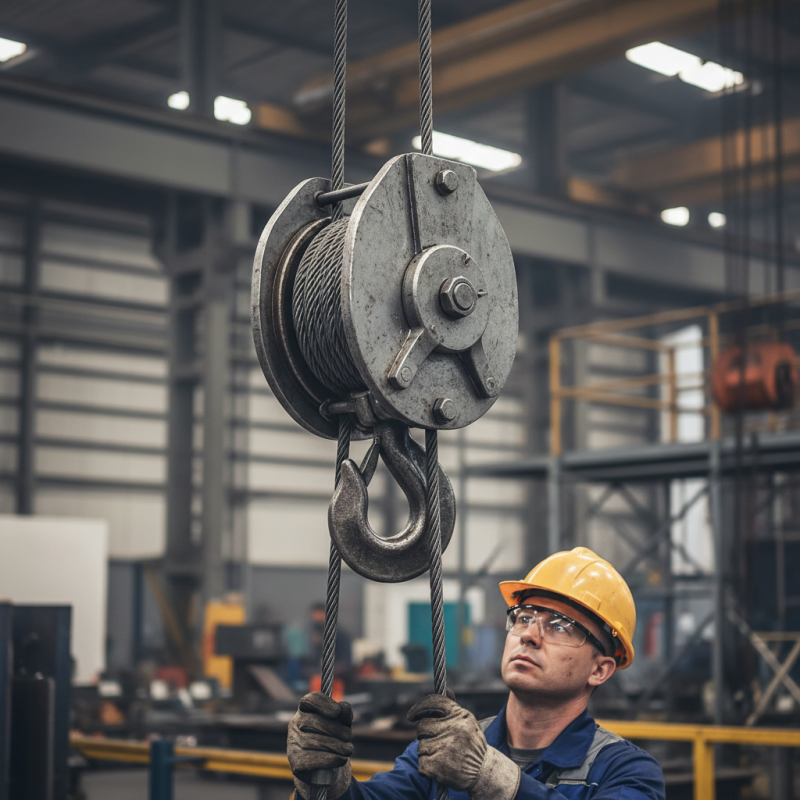
Wire rope pulling hoists are essential tools in various industries. These hoists utilize strong wire ropes to lift and move heavy loads. They operate on a simple mechanical principle: a motor winds the rope around a drum. As the rope unwinds, it pulls the load upward. Key specifications include lifting capacity, rope length, and power requirements. According to industry reports, effective use of such hoists can enhance efficiency in construction and manufacturing.
Understanding the components is crucial. The wire rope is often made from multiple strands to ensure strength and flexibility. Load capacity varies widely; some models can lift loads exceeding 10 tons. Regular maintenance is vital to ensure safety and longevity. Monitoring wear on the wire rope and inspecting the hoist's mechanical parts can prevent costly breakdowns.
Tips: Always choose the right size for your job. A hoist that is too small can fail under pressure. Check the manufacturer's guidelines for load limits. Regular inspections help catch potential issues early. Remember, safety first! Overloading is a common mistake. It can lead to equipment failure and serious accidents.
Key Components of Wire Rope Pulling Hoists
Wire rope pulling hoists are essential machines in various industries. They help lift heavy loads with ease and precision. The key components of these hoists contribute significantly to their functionality and effectiveness. Understanding these components is vital for optimal use and safety.
One of the primary components is the wire rope itself. High-tensile steel wire ropes can handle considerable weight, often up to several tons. According to industry reports, the strength of wire rope depends on its diameter and construction. Another crucial element is the hoist mechanism. It operates through a pulley system that provides mechanical advantage, allowing workers to lift loads efficiently. The gear ratio also influences performance. A higher ratio means less effort is needed to lift heavier loads.
Additionally, the power source plays a critical role. Many hoists use electric or hydraulic systems. Electric models are favored for indoor use, while hydraulic units are often employed in outdoor applications. Both systems have their advantages and limitations. Maintenance is another area that requires attention. Regular inspection of components like the wire rope and hoist mechanism is necessary. Neglecting this can lead to failure or accidents, highlighting the importance of proper care.
Operating Principles of Wire Rope Pulling Hoists
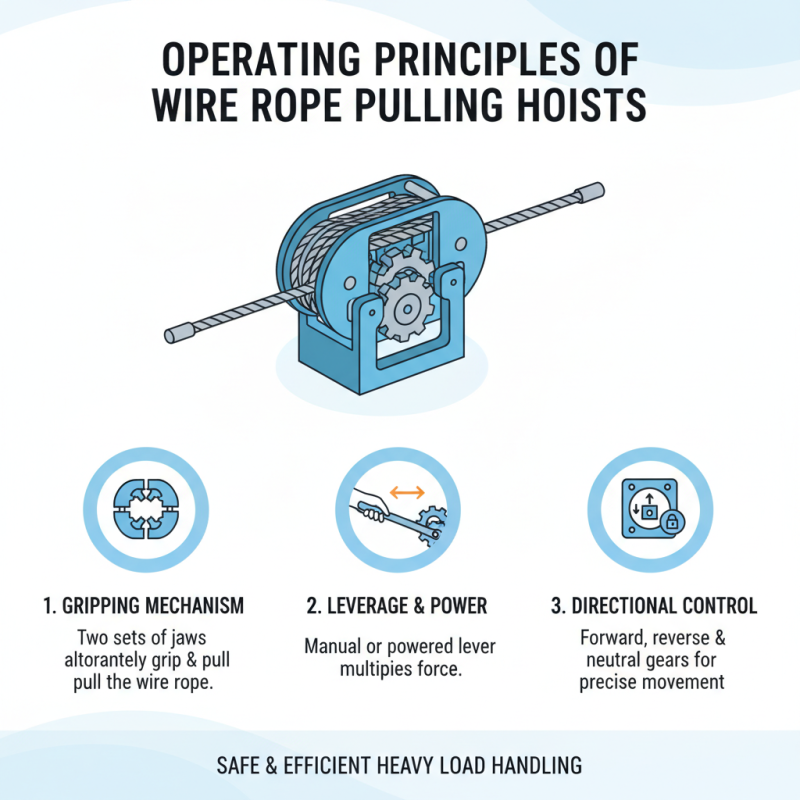
Wire rope pulling hoists are essential tools in various industries. They are designed to lift and pull heavy loads. Understanding how they operate is crucial for safe and efficient usage.
The core principle behind wire rope pulling hoists is their mechanical advantage. A wire rope, strong yet flexible, is wound around a drum. When the hoist is activated, the drum rotates, pulling the wire rope. This motion translates directly into lifting or pulling the attached load. The design often includes pulleys, which can increase lifting efficiency by reducing the effort needed to move heavy items.
Operator skill plays a significant role in utilizing these hoists. An inexperienced user may misjudge the load's weight or the hoist's capacity. This can lead to accidents. Regular maintenance checks on the hoist’s components are vital for ensuring safety and reliability. Observing these practices can mitigate risks and enhance effectiveness in various tasks.
Applications of Wire Rope Pulling Hoists in Various Industries
Wire rope pulling hoists are vital tools in various industries. They provide efficient lifting and pulling solutions for heavy loads. Their versatility allows them to be used in construction, manufacturing, and even in rescue operations. For instance, construction sites often rely on these hoists to move steel beams into place. This streamlined process enhances project timelines and worker safety.
In manufacturing, wire rope pulling hoists play a crucial role in assembly lines. They assist in moving heavy machinery and components with precision. These hoists ensure that materials are transferred smoothly, thus minimizing delays. Additionally, in the rescue industry, wire rope pulling hoists are essential for safely lifting and moving individuals during emergencies. They help responders navigate difficult terrains and provide timely assistance.
However, there are limitations. Maintenance is crucial for their longevity and efficiency. Neglecting routine checks can lead to failures during operations. Training operators is equally important. Misuse or lack of knowledge can result in accidents. Industries must consider these factors to harness the full potential of wire rope pulling hoists safely and effectively.
Maintenance and Safety Considerations for Wire Rope Pulling Hoists
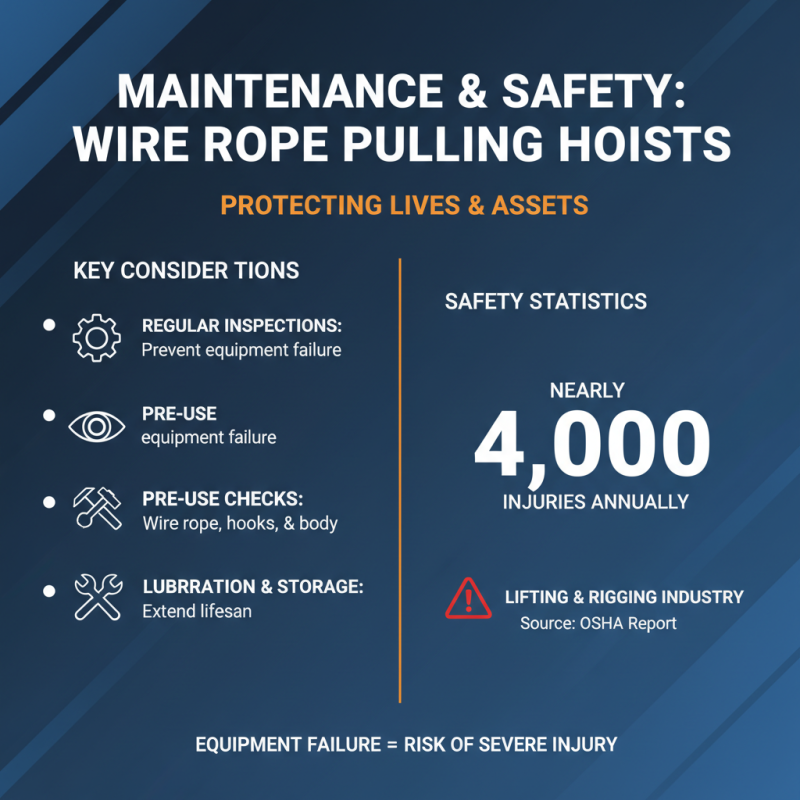
Wire rope pulling hoists are vital in heavy lifting applications. However, proper maintenance is crucial for safe operation. Regular inspections can prevent catastrophic failures and injuries. According to a report by the Occupational Safety and Health Administration (OSHA), nearly 4,000 injuries occur annually in the lifting and rigging industry, many attributed to equipment failures.
Routine checks should focus on the wire rope's condition. Look for fraying, kinks, and corrosion. Over time, these issues can compromise the hoist's integrity. Moreover, adherence to load limits is vital. Exceeding the maximum capacity can lead to dangerous malfunctions. Statistical data from industry safety reports suggests that 70% of hoist failures stem from overloaded equipment.
Safety protocols should include providing adequate training for operators. Even minor miscalculations can result in severe consequences. An accessible, clear guide on emergency procedures can prove invaluable. Consider developing a checklist for daily inspections. While most operators adhere to safety measures, attention to detail often wanes under pressure. Regular workshops can reinforce the importance of these practices. Keeping the equipment in top shape is non-negotiable.