• Facebook
  • Instagram
  • YouTube
  • Alibaba
Search

What Are Pull Down Ratchet Straps Used For?

Pull Down Ratchet Straps are practical tie-down tools used to secure cargo during transport, storage, and everyday moving tasks. Their ratcheting mechanism creates controlled tension around items such as furniture, lumber, motorcycles, appliances, and boxed equipment. Unlike ropes, these straps offer predictable tightening and a visible webbing surface for inspection. They are not designed to lift loads. That distinction matters.

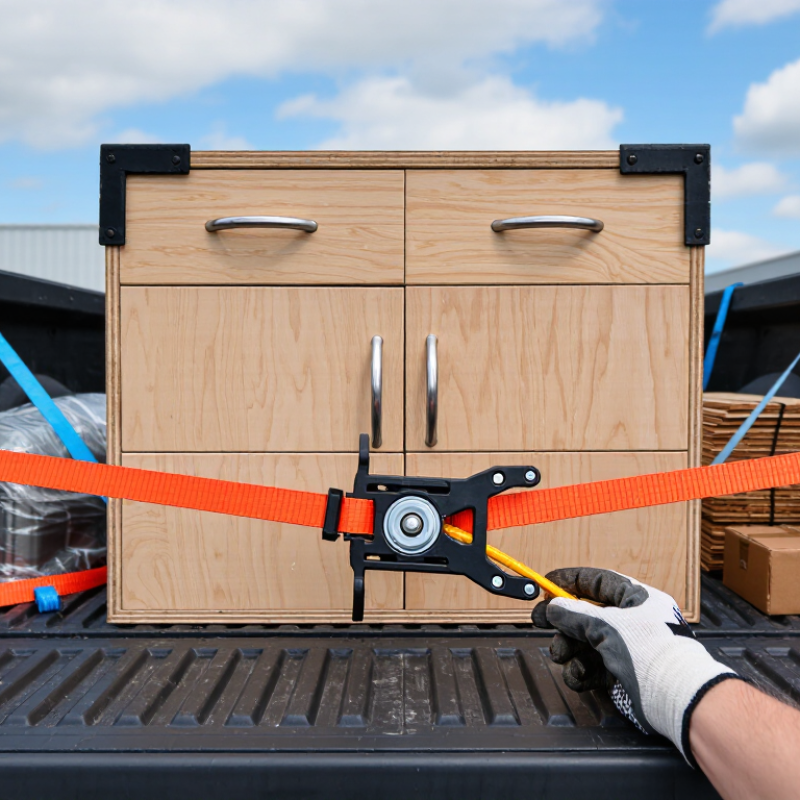
In real work, operators often use them on pickup beds, utility trailers, flatbed platforms, and warehouse carts. A strap can hold a cabinet against a trailer wall while the vehicle travels over uneven roads. Edge protectors help prevent sharp corners from cutting the webbing. The strap should match the cargo’s weight, shape, and stability. Its working load limit must be checked before use. Guessing is risky.

Reliable use depends on more than pulling the handle firmly. Inspect the webbing for fraying, chemical damage, melted fibers, or distorted hardware. Confirm that the hooks sit correctly and that the ratchet closes completely. Follow the manufacturer’s instructions and applicable transport requirements. Weather, vibration, and repeated loading can change performance. Even experienced users can overlook a loose strap after a long drive. A final check is worthwhile. This guide explains what Pull Down Ratchet Straps are used for, how their parts work, and where common mistakes appear. The advice is practical, but judgment remains essential. No guide replaces careful inspection.
What Are Pull Down Ratchet Straps Used For?

What Pull Down Ratchet Straps Are

Pull down ratchet straps are webbing tie-down assemblies designed to hold cargo against a vehicle bed, trailer, or pallet. A typical assembly has a ratchet handle, a spool, woven polyester webbing, and end fittings such as hooks. The operator threads the webbing through the spool and pumps the handle, winding in slack and creating tension. That tension presses the load downward and helps limit shifting during transport. Not for lifting.

The strap’s working load limit (WLL) indicates its rated tie-down capacity; it is not the same as breaking strength. Check the sewn label, inspect the webbing for cuts or abrasion, and ensure the hooks and anchor points are compatible. A strap can feel tight yet still be poorly positioned. For commercial motor vehicle cargo, FMCSA’s Cargo Securement Rules, 49 CFR §393.106(d), require the aggregate WLL of the securement system to be at least half the cargo’s weight. This is a system-level threshold, not a rating for each individual strap. Load shape, tie-down angle, and edge protection still matter, so a single number cannot determine a safe setup.

How Pull Down Ratchet Straps Work

What Are Pull Down Ratchet Straps Used For?

How Pull Down Ratchet Straps Work

A pull-down ratchet strap tightens cargo by winding webbing around a rotating spool inside its metal ratchet. The loose end passes through the spool slot, then the operator moves the handle up and down. Each stroke turns the spool and takes up slack. The principle is simple. When tension feels adequate, the handle folds flat and the ratchet locks. To release it, open the safety lever and move the handle fully open, freeing the spool.

For practical use, place the strap over the load and attach its hooks to secure, aligned anchor points. Pull slack through before ratcheting; otherwise, repeated handle strokes may only remove loose webbing. Check that the strap lies flat, without twists, and protect it from sharp edges. Small details matter. Tighten until the cargo is stable, not until the webbing or package deforms. Compare the strap’s working load limit with the load and setup, rather than judging by appearance alone. Cargo can settle during travel, so recheck tension when it is safe to stop. Uneven hook angles can also create uneven pressure; that detail is easy to miss.

Common Uses for Securing Different Loads

Pull-down ratchet straps are useful for keeping cargo steady on trailers, pickup beds, and roof racks. Their handle lets you tighten webbing around bulky items such as furniture, appliances, and stacked boxes. A sofa can shift during a sharp turn, so run the strap across a strong part of its frame, not a loose cushion. Add padding where webbing touches painted or polished surfaces.

They also help secure lumber, bundled pipes, garden equipment, and small machinery. Keep long materials supported at several points, and use edge protectors where sharp corners could cut the webbing. Check the strap’s working load limit and the strength of the anchor points; a strong strap cannot compensate for a weak tie-down. Tighten until the load stops moving, but avoid crushing fragile cargo. That balance takes practice. After a short drive, stop somewhere safe and check for loosened webbing or a shifted load. A quick glance can miss movement, especially when cargo settles against uneven surfaces.

What Are Pull Down Ratchet Straps Used For? Common Uses for Securing Different Loads

Pull down ratchet straps are commonly used to secure lumber, furniture, appliances, motorcycles, and equipment during transport. This chart shows how the force components of a single strap segment change with its angle above the deck. The values are idealized percentages of strap tension; they do not account for friction, strap pretension, cargo shape, or movement during transport.

How to Choose the Right Ratchet Strap

When choosing a pull-down ratchet strap, match its working load limit (WLL) to the cargo and the complete tie-down arrangement. For U.S. road transport, FMCSA’s cargo-securement rule requires the combined WLL of tie-downs to equal at least half the cargo’s weight. A 1,000-pound load therefore needs at least 500 pounds of aggregate WLL under that rule. This is a minimum, not a reason to choose the smallest strap. Check the label on every assembly; the weakest component can limit the system.

Then consider the load’s shape, surface, and travel conditions. A wide strap can spread pressure across a crate, while edge protectors help prevent sharp corners from cutting webbing. Polyester webbing is a common choice because it stretches relatively little, but oil, abrasion, UV exposure, or damaged stitching can weaken it. Check the ratchet’s handle clearance, too. It should tighten smoothly without striking the cargo. The WSTDA’s voluntary T-1 standard covers tie-down assembly performance and testing; use it as a reference alongside the manufacturer’s ratings. Inspect straps before use. Frayed edges? Retire them. I would also recheck tension after the load settles, since even a correctly selected strap can loosen during transit.

Safe Handling, Inspection, and Maintenance

Pull-down ratchet straps secure cargo by tightening webbing around a load and anchoring it to suitable points. Safe handling starts with matching the strap’s working load limit to the cargo and tie-down arrangement. The U.S. Federal Motor Carrier Safety Administration’s Cargo Securement Rules require aggregate tie-down working load limits of at least half the cargo’s weight in covered situations. Requirements vary by load and jurisdiction, so check the applicable rules. Tighten the strap evenly; sharp edges can cut webbing, so use edge protection where needed. Keep hands clear of the ratchet handle as it closes. It can snap back.

Inspect each strap before use. Look closely for cut or frayed fibers, damaged stitching, distorted hardware, corrosion, and a ratchet that sticks or fails to lock. Check the sewn label too; unreadable capacity information is a reason to set the strap aside. The Web Sling & Tie Down Association’s guidance emphasizes regular inspection and removing damaged tie-downs from service. After use, clean off grit and moisture, let the webbing dry fully, then store it away from sunlight, chemicals, and sharp tools. A quick glance is not always enough.

Tips: Pull slack through by hand before ratcheting. Never knot webbing to shorten it. If damage leaves you uncertain, don’t use the strap.